
Backstage at Sziget Festival in Budapest, Natasha Bedingfield is in a particularly reflective mood. It is her first time singing in Hungary, and although she has a show in Germany the following day, she is determined to get a taste of the festival.
“We’re here enjoying it,” she says, already thinking about which artists she might catch during her time on the island.
For Bedingfield, festivals offer something different from the controlled environment of a headline show. There is an excitement to them, but also a shared sense of curiosity. “Everyone who goes to a festival is a music lover,” she says. “And you can pick up that every festival has its own unique kind of thing. It feels like you’re stepping into a culture.”
There is another attraction, too: the musicians themselves. Festivals create rare opportunities for artists who might otherwise spend their careers travelling in parallel to cross paths.
“We’re out on our own doing our thing,” Bedingfield says, describing those backstage encounters where one artist spots another and suddenly there is a quick exchange of affection and recognition.
It is a long way from where Bedingfield began her career more than two decades ago.
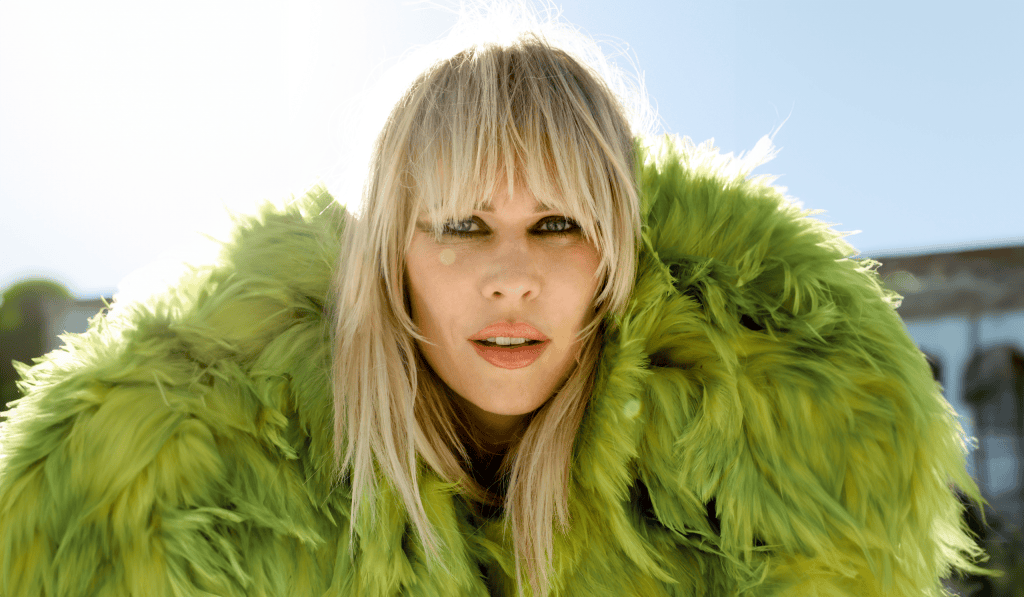
From record-label rules to creative freedom
One of the biggest changes she has witnessed is the disappearance of many of the rules that once surrounded being a successful recording artist.
Bedingfield remembers being a priority artist 21 years ago. For artists and record companies, there was enormous uncertainty. Yet while the industry was worrying about what might happen next, her own career was thriving.
The industry that emerged from that period is almost unrecognisable.
“There were so many rules on me back then,” she recalls. There were pictures to approve, permissions to obtain and expectations about how she should look. Even something as seemingly simple as what she wore could be dictated by the label.
“Labels saying you need to wear makeup,” she remembers. She was encouraged to wear jeans and present herself as a relaxed girl.
Today, the relationship between artist and audience is much more direct. Artists can create, release and promote their own work without necessarily waiting for an institution to give them permission.
“So now it’s like you can kind of invent yourself,” she says.
That freedom comes with its own pressure. Without a record company to blame when something goes wrong, the artist has to own the decisions completely. And Bedingfield admits there was something reassuring, particularly when she was younger, about having someone else provide that stamp of approval.
Now, however, she finds the freedom exhilarating.
She is currently releasing new music independently, and the experience feels noticeably different. There is less tension because, ultimately, she likes what she is making.
“What a wow. How lucky am I?” she says.
What would she bring back?
If Bedingfield could resurrect anything from the music industry of the past, what would it be?
Music videos might be the obvious answer. They once occupied a much more central place in the way audiences discovered and consumed music, and there is a sense that some of that culture has been lost.
But Bedingfield isn’t nostalgic for nostalgia’s sake.
She points instead to the way artists continue to reinvent the visual side of music. Lady Gaga, she suggests, brought a theatricality back into pop that recalled artists such as Cher. And now, she says, a new generation of performers is making music feel playful, unpredictable and visually exciting again.
“I like it,” she says of the current landscape. “Anything can happen.”
That unpredictability extends to collaboration. Bedingfield loves the fact that artists can work across genres and generations without the old hierarchies necessarily getting in the way.
She describes the thrill of unexpected live collaborations, including rappers turning up onstage and the artists swapping songs. It is the playfulness of those moments that appeals to her.
So would she bring anything back?
“Not really, no.”
She would rather keep moving forward.
The case for live music
There is, however, one thing Bedingfield feels strongly about protecting: live performance.
As artificial intelligence and increasingly sophisticated technology change the way music can be created, she worries about what might happen to creativity. At the same time, she sees an unexpected consequence: the more technology changes recorded music, the more important it becomes for artists to prove themselves in the real world, in front of an audience.
Festivals are part of that.
Bedingfield believes the current appetite for live music is a positive development, particularly at a time when technology can make recorded performances increasingly difficult to distinguish from reality.
She is particularly sceptical of over-reliance on Auto-Tune.
“Perfect singing is overrated,” she says. What matters more is soulfulness.
For an artist who has built a reputation on live vocals, it is a subject close to home. She points out that singers who routinely rely on vocal correction can eventually become disconnected from what their unprocessed voice actually sounds like.
The audience, meanwhile, may never know the difference.
“No one can write your story for you”
That idea of authenticity feeds directly into Bedingfield’s current chapter.
She returns to one of her best-known songs, Unwritten, and its central message: nobody else gets to write your story for you.
It was originally written, she explains, with a much younger listener in mind. But the meaning has evolved as she has.
People are constantly trying to define artists, she says. There is a tendency to decide what kind of artist someone is, or even to suggest that their story has already reached its conclusion.
Bedingfield rejects that idea completely.
She has been asked by journalists whether she is surprised by the renewed interest in her work and whether she is thrilled that this moment has happened.
Her response is surprisingly matter-of-fact.
“I’m not surprised.”
She compares herself to an athlete. She saw the possibility of this happening. She believed in it.
There is also a broader point here about women in music. Bedingfield questions why women are so often expected to act surprised by their own success, particularly when they have continued working towards it.
Rather than apologising for ambition, she wants to embrace it.
“I feel inspired to be more empowered,” she says, describing a desire to let her ego become “a little bit more healthy” and to acknowledge that she did, in fact, see this coming.
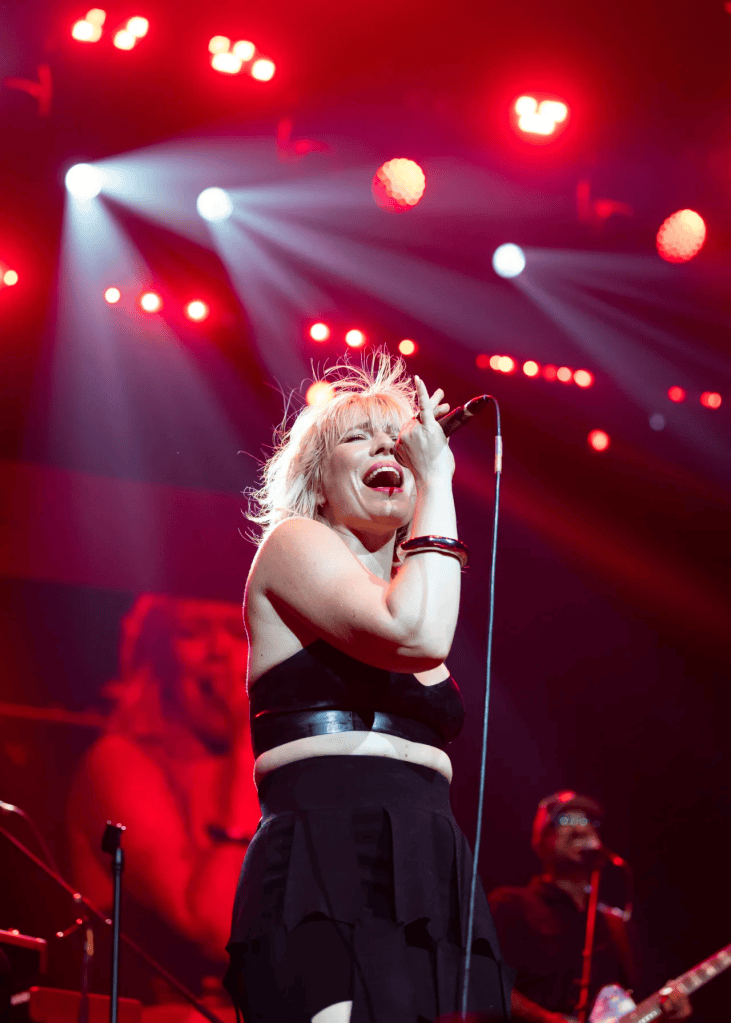
A different era for being different
The music industry has also changed in its relationship with individuality.
Bedingfield sees the current cultural moment as one in which difference is increasingly celebrated rather than hidden. Artists can build connections with audiences through the things that make them unusual, rather than being encouraged to smooth those things away.
She mentions diversity, neurodivergence, orientation and insecurity – characteristics that people might once have felt pressure to conceal.
Now, she argues, hiding those differences can actually be a disadvantage.
During the conversation, Bedingfield also reveals that she discovered she has ADHD, despite being told for much of her life that she did not.
It fits with her wider philosophy: the things that make people different can also be the things that make them compelling.
The next chapter
That philosophy is particularly relevant to the new single Bedingfield is preparing to release.
She describes the song through the feeling of reading a book and reaching those three little dots — the moment when something is about to happen, but you don’t yet know what.
It is about tension, uncertainty and embracing the not-knowing.
In some ways, she sees the song as a bridge. Audiences understandably want the positive, uplifting music they associate with Natasha Bedingfield, but she also wants the freedom to evolve.
“I’ve got a lot of emotions, negative emotions too,” she says.
The new music hints at those emotions without abandoning the connection she has built with listeners.
That evolution is perhaps the most interesting part of Bedingfield’s current chapter. In the past, releasing a song could feel like a very simple equation: it went on Top of the Pops, and then it had to be a hit.
The modern music industry works differently.
Songs can grow gradually. Audiences can discover them through live performances, social media or word of mouth. An artist doesn’t necessarily have to fit neatly into a single moment.
Bedingfield points to artists such as Ray and Teddy Swims as examples of performers who have demonstrated the power of committing to something they genuinely believe in and allowing audiences to find it.
And that brings her back to the central idea that has followed her throughout her career: you cannot let somebody else decide when your story is finished.
At Sziget, surrounded by artists, new audiences and the chaos of a festival that feels like its own temporary culture, Natasha Bedingfield seems perfectly comfortable with not knowing exactly what comes next.
Perhaps that is the point.
The story is still being written.
You can now pre-register for tickets to Sziget Festival 2027




Leave your comments here