

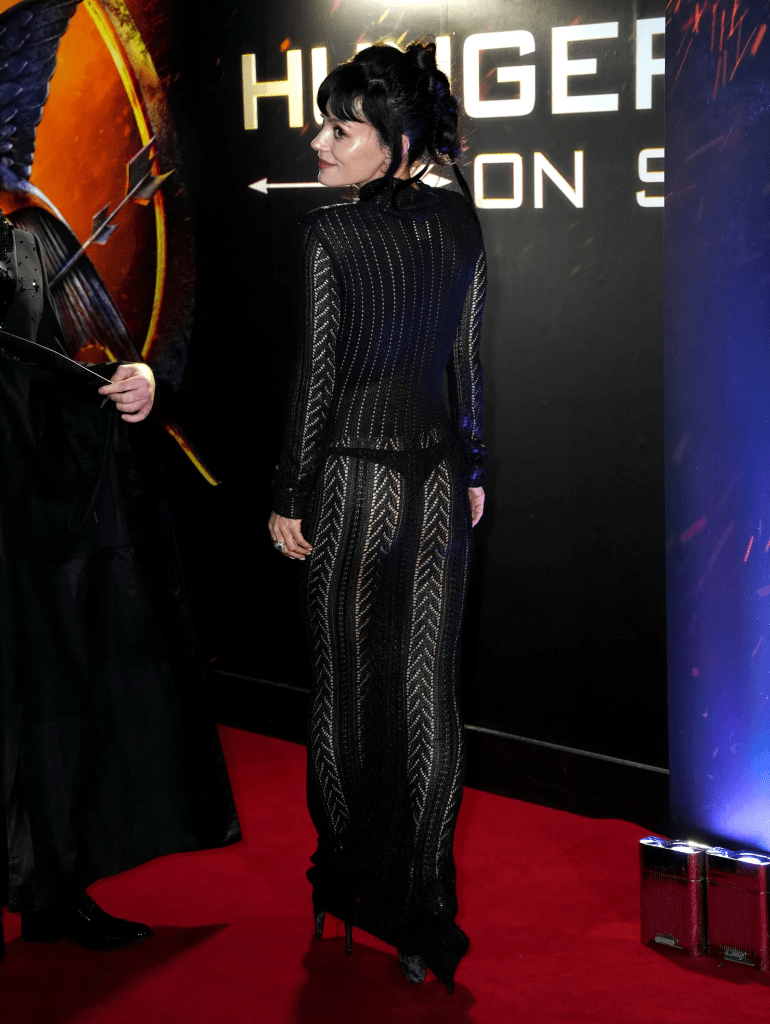
On 12 November 2025, at the London premiere of The Hunger Games: On Stage (in the Canary Wharf district), Lily Allen made what many are calling a definitive fashion moment. She arrived in a sheer black knit dress, from the late‑’90s Dior archive (specifically the Galliano‑era Dior collection), styled with nothing but a black thong underneath, thereby completely foregoing a bra.
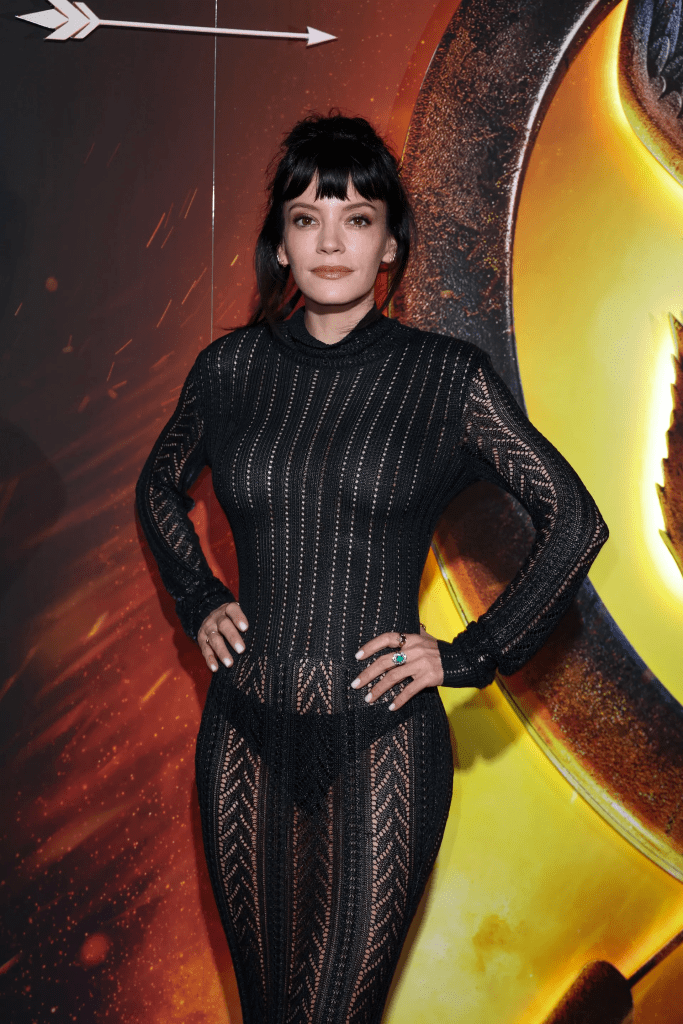
The dress featured a high neckline and long sleeves, but most strikingly a see‑through knit skirt that revealed her underwear. The look was completed with black patent‑leather platform shoes, layered jewellery (rings, earrings), a tousled up‑do with bangs, and minimal makeup, just a shimmery brown eye and soft lip.
Revenge Dressing?
This appearance isn’t just about fashion, it has context. The notion of a “revenge dress” harks back to Princess Diana’s famous 1994 black off‑the‑shoulder gown, which was widely interpreted as a bold response to the broadcast of her husband’s admissions of infidelity.
In Allen’s case, she released the album West End Girl earlier this year—widely seen as reflecting the breakdown of her marriage to actor David Harbour. Her red‑carpet choices since then have leaned into that narrative of reclaiming power and rewriting her image. Vogue describes the latest outfit as “both Capitol chic and a cheeky bit of revenge dressing.”
In the age of social media and red‑carpet saturation, distinctive moments are harder to carve out. Allen’s choice here isn’t just “another dress” it’s a statement piece. It lives at the intersection of art, fashion, celebrity personal narrative and cultural symbolism. The dress becomes a tool of storytelling: of reinvention, of assertion, of visibility.
For the industry, it signals a resurgence of “revenge dressing” as not just a one‑off moment, but a sustained narrative arc. Rolling this into her album launch and public persona, Allen is using fashion as a visual second voice to her music.




 walkbackstage.com
Leave your comments here