
In the heart of London, beneath soft autumn skies and the city’s familiar hum, a figure from the Amazon rainforest walked into the global spotlight. On 15 October 2025, Chief Raoni Metuktire, the legendary leader of the Kayapó people, was honoured with the 13th Liberatum Cultural Honour, a recognition that transcended art, politics and geography. It was more than an award ceremony; it was a meeting of worlds, where Indigenous wisdom and global culture intertwined in an evening dedicated to humanity’s shared responsibility to protect the Earth.
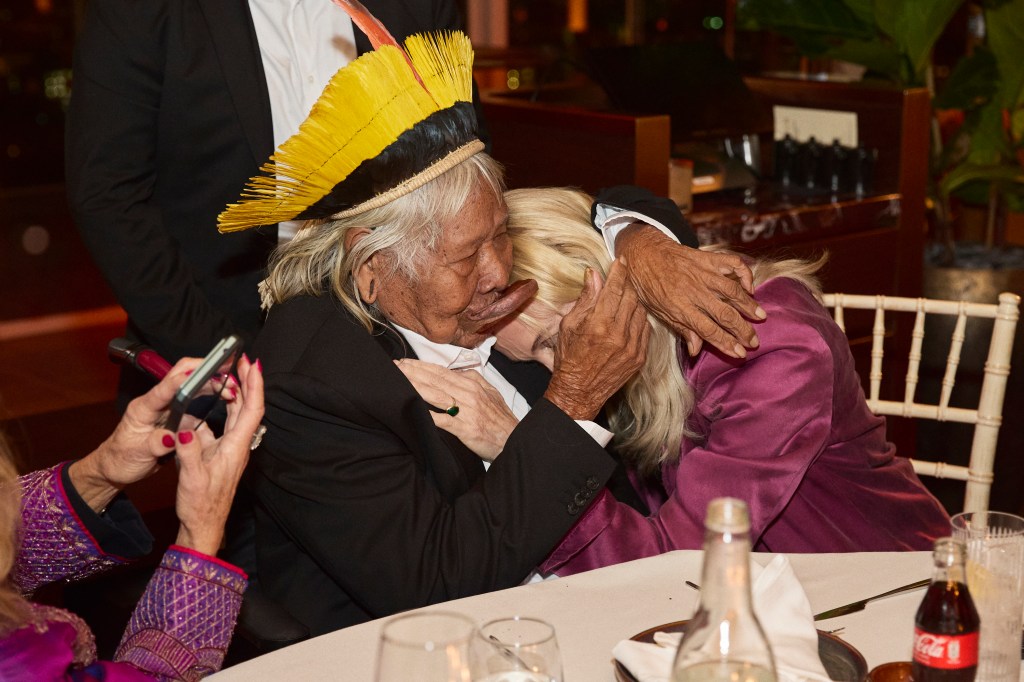
Chief Raoni, now in his nineties, has spent decades defending the Amazon rainforest and advocating for the rights of Indigenous peoples. Born around 1932 in the village of Kapôt, in Brazil’s Mato Grosso region, he rose to prominence not only as a tribal chief but as a global environmental leader. His striking wooden lip-plate and vibrant headdress are symbols of his Kayapó heritage, but his influence extends far beyond the forest canopy. Since the 1980s, when he first captured international attention through his partnership with the musician Sting, Chief Raoni has travelled the world urging governments, leaders, and citizens to recognise that the survival of the Amazon is inseparable from the survival of humankind.
His message has always been one of clarity and urgency. “You need to understand that if you don’t preserve the forest, we will all have problems — all of us,” he has said repeatedly, a warning that feels more pressing than ever as global deforestation accelerates. His lifelong activism has earned him respect across continents, and the Liberatum award marked a rare moment when an Indigenous leader was celebrated not only for resistance, but for the enduring cultural strength that underpins it.
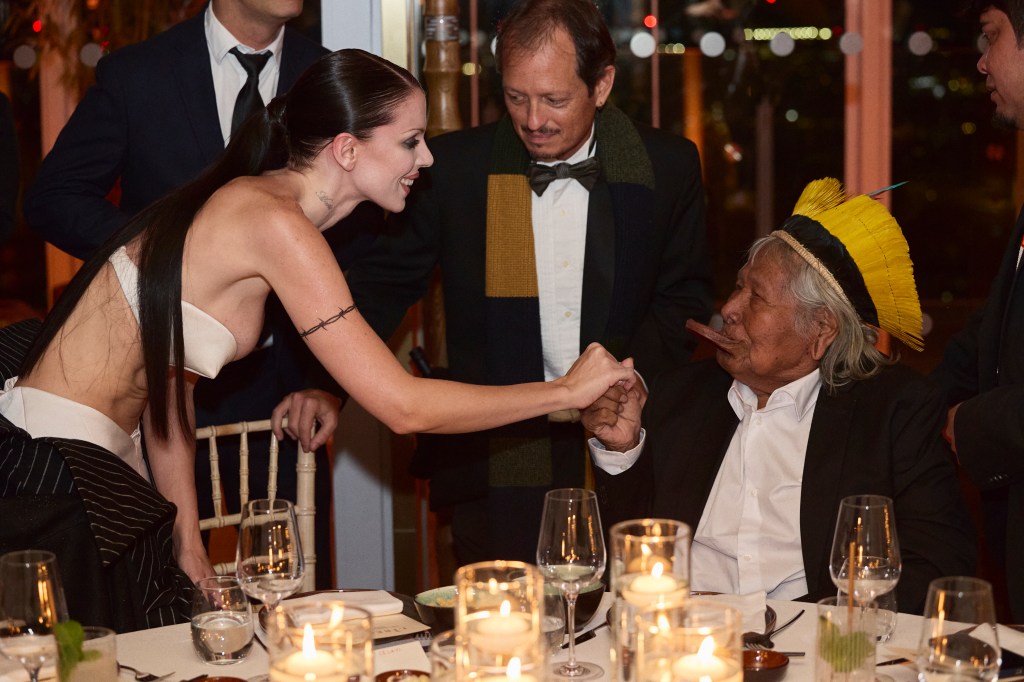
The London ceremony gathered an extraordinary mix of guests from across art, film, and activism, including Benedict Cumberbatch, Bianca Jagger, Anitta, and more. Yet despite the glamour, the night belonged wholly to Chief Raoni. The award represented more than cultural diplomacy; it symbolised the growing recognition that Indigenous leadership must sit at the centre of global environmental dialogue. Coming just weeks before COP30 in Brazil, which will take place in the Amazon, the timing of this honour could not have been more poignant.
In his address, Chief Raoni spoke not of personal achievement but of collective duty. “The Amazon is our biggest chance to keep living on this Earth,” he declared. His words hung in the air, weighty and unembellished, a call to conscience for a world too often distracted by comfort and convenience.
The significance of the honour extended far beyond the ceremony itself. For Liberatum, an organisation that has long championed creativity, sustainability and cross-cultural understanding, Raoni’s recognition marked a deliberate broadening of what culture means. Culture, in this sense, is not confined to galleries or concert halls; it is the living, breathing relationship between humanity and the land. Chief Raoni embodies that idea completely. His life is both art and activism, a tapestry woven from community, resilience, and an unbreakable bond with nature.
At 93, Raoni continues to think of the future. For him, the work is not about fame or politics, but about life itself, the continuation of a sacred covenant between people and the planet.

The image of an Indigenous elder in full Kayapó regalia standing beneath the chandeliers in itself, a moment of profound symbolism. It represented a bridge between two worlds that rarely meet on equal terms. Yet here, for a night, they did. The applause that filled the room was not just for a man, but for the millions he represents, the forest defenders, the communities who live in balance with nature, and the message they have carried for centuries: that true civilisation begins with respect for the Earth.
As the evening drew to a close, Chief Raoni’s words resonated like a quiet echo of truth: “Without the forest, there is no future.” It was both a warning and a hope , a reminder that our greatest cultural achievement may yet be our ability to listen.





 walkbackstage.com
Leave your comments here